
Turnkey Automation Solutions for Petrol and LPG
Turnkey fuel station automation means one supplier for the forecourt, the tank farm, the delivery fleet and the terminal. We build the controller, the probes, the readers and the cloud platform in-house, then integrate them with the dispensers, tank gauges and back-office systems you already run. Systems are live in more than 32 countries, with 450+ sites automated and 150+ trucks connected.
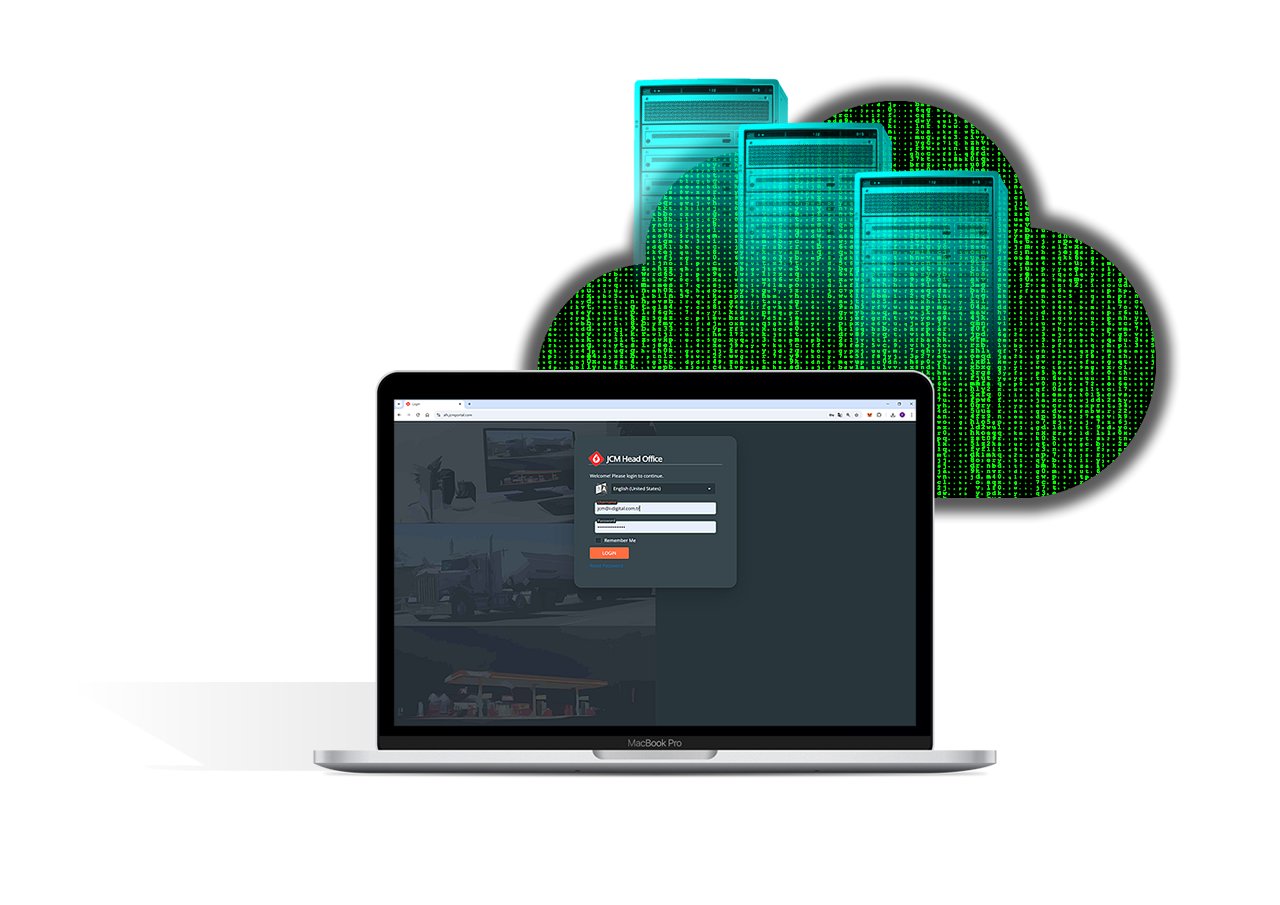
One supplier for the whole operation
What turnkey fuel station automation covers
Most fuel businesses end up with automation from three or four suppliers: one for the forecourt controller, one for the tank gauge, one for the payment terminal, and the back office somewhere else. Every compatibility problem then has to be negotiated between them. We supply the whole set — forecourt control, tank gauging, delivery, terminal operations, loyalty, payments and the JCM online fuel station management platform that the owner and the head office open in the morning — and one engineering team answers for all of it.
The hardware and the firmware are ours. Forecourt controllers, LPG control panels, level probes, register boards, RFID readers and the cloud software are developed in-house by the same engineering team, so the interfaces between them are built once instead of being patched together in the field.
Integration comes before replacement. Existing dispensers, tank gauges, payment terminals and ERP or back-office systems are integrated wherever the protocol allows, which is what makes staged modernisation possible on a site that cannot stop selling fuel.
Fuel and LPG are sold by measurement, so dispenser and tank data has to hold up to a defined level of scrutiny. OIML R 117-1:2019 is the international recommendation for dynamic measuring systems for liquids other than water: it sets the metrological and technical requirements for fuel dispensers, for LPG dispensers for motor vehicles and for measuring systems on road tankers, where those systems fall under legal metrology control. Tank level is the other half of the same record — i-LS magnetostrictive probes read product level and the water interface to ±0.5 mm, with ±0.05 mm resolution.

What we automate
This is where most projects start, and it sets the sequence. The forecourt controller and the tank gauging come first because they produce the two records everything else depends on: what was sold, and what is left in the tank. Delivery, terminal, loyalty and payment automation are added once those two are trusted, so a turnkey fuel station automation project is normally planned one module at a time. Each module below has its own page with specifications and options; the full fuel station automation product range is listed together.
Station automation
i-Console is the forecourt controller: it runs dispensers and pumps, reads the tanks, releases payments and manages loyalty from one dashboard, on site or from the cloud. It runs on embedded hardware built for a forecourt cabinet rather than on a PC, so it does not share the virus attacks and operating-system crashes that affect PC-based station systems. Tank data comes from the i-Level automatic tank gauge with i-LS magnetostrictive level probes: the ATG-7 controls up to 8, 16 or 32 tanks, the compact ATG-4 up to 4.
Tanker and fleet delivery
i-Truck covers the run from the terminal gate to the customer tank. The driver and the customer are identified before the drop, the vehicle is tracked by GPS with geo-fencing, the electronic register is controlled by the system, and transaction data reaches the cloud over the cellular network as it happens. More than 150 trucks are connected to the delivery platform.
Terminal and depot
i-Terminal handles job orders, loading bays, RFID truck authentication, entry and exit weights and multi-compartment loading at fuel and LPG terminals and depots. It integrates with SAP, Oracle and other ERP systems, so the job order, the loading and the stock movement are written into the same system. LPG sites add the i-Control LPG station control panel, which brings gas sensor and emergency-stop inputs into the same installation.
Loyalty and payments
i-Pay is the outdoor payment terminal: cards, banknotes, contactless, barcode vouchers and coupons, in attended or unattended mode, around the clock. The i-Reader MIFARE RFID reader adds identification at the dispenser, so dispensing is released only for an identified card or tag, preset values can be sent to the dispenser, and the transaction lands against the right account. More than 250,000 loyalty tags have been issued to customers who identify themselves at the pump.
Frequently asked questions
What does "turnkey" mean here?
We deliver the complete system — hardware, firmware, cloud software, integration support and commissioning — instead of separate components from different suppliers. In practice that is one quotation, one installation plan, one commissioning sequence, and one team to call when something does not behave. The interfaces between the controller, the tank gauge, the payment terminal and the back office are our problem to solve, not yours.
Which operations can be automated?
Petrol and LPG stations, fuel tankers and bobtails, logistics and stock management, customer loyalty programmes, and payment systems. A turnkey fuel station automation project can cover one of these or all of them: a single site, a multi-site network, a delivery fleet, or a terminal and the depots that feed it.
Can a solution start small and grow?
Yes. Start with one module — forecourt control or tank gauging, for example — and add truck, terminal, loyalty or payment automation later. The modules share the same platform and write into the same cloud data layer, so nothing has to be exported from one system into another when the next step arrives.
Do you integrate with existing equipment?
Yes, wherever the protocol allows: existing dispensers, tank gauges, payment terminals and ERP or back-office systems are integrated rather than replaced. That is what makes staged modernisation possible without stopping trade at the site.
What do you need from us to prepare a proposal?
A short description is enough: your country, what you operate — station, terminal or fleet — the dispenser and tank gauge brands already installed, your back-office or ERP software, and what you want under control first. The engineering team answers with the modules that fit the site and the order to install them in.
Who supports the system after commissioning?
The engineering team that built it, through the helpdesk and remote diagnostics. Because the systems are cloud-connected, many faults are diagnosed remotely before a site visit is arranged. The head office is in Gebze, Kocaeli, Türkiye; helpdesk hours are Monday to Friday, 9:30–17:30 (GMT+3).
Plan your automation project
Tell us what you operate today and what you want to control. A useful first message is short: your country, the type of operation — station, terminal or fleet — the equipment you already run, and what you want under control. That is enough for the engineering team to come back with a concrete proposal.
For operators with more than one site, the answer also covers sequence: which site runs first, which modules it needs, and what can stay on the equipment already installed. Most projects start with one site and one module — a forecourt controller, or tank gauging — then add the rest as the numbers prove themselves.
If you would rather test the architecture against your own site first, send the dispenser brands, the tank count and the back-office software you run, and the team will walk through the same flow with your equipment instead of a generic example.
Transform your fuel business with our solutions.
Tell us about your stations, terminals or fleet and we will show you what can be automated first. Most projects start with one site and one module, then extend once the sales and stock figures come from the system rather than from a spreadsheet.
If you already run an i-Digital system, questions about a site in service go to technical support and the helpdesk. For a new project, send a short description of the operation and the engineering team will reply with the modules that fit and the order to install them in.